INTRODUCTION: WHEN FASHION BECAME PHILOSOPHY
“Fashion should not be something that you just consume,” Rei Kawakubo once said.
And with those words, the Japanese visionary behind Comme des Garçons changed the way the world sees clothing — forever.
From the minimalist streets of Tokyo to the theatrical catwalks of Paris, Kawakubo built a brand that is not just about design, but about disruption. She took the foundations of fashion — beauty, perfection, femininity — and tore them apart, only to reconstruct something radically new.
Comme des Garçons, meaning “like boys” in French, has become a cultural language — a philosophy stitched into black fabric, a dialogue between art, identity, and rebellion. This is the journey of how a single woman transformed from an outsider in Japan to a global architect of fashion’s avant-garde movement.
SECTION 1: ORIGINS IN TOKYO — THE REBELLION BEGINS (1969–1979)
The story starts in Tokyo, 1969. Japan was experiencing a post-war economic boom, and fashion was bright, structured, and commercial. Amid the flood of Western trends, one woman stood apart — Rei Kawakubo, a graduate of Keio University with a degree in Fine Arts and Literature.
With no formal training in design, Kawakubo entered the fashion world as a stylist for a textile company. But soon, she felt constrained by the limits of commercial clothing. Her instinct pushed her to start something of her own — something pure, free, and fearless.
Thus, Comme des Garçons was born.
The name, inspired by the French song “Tous les garçons et les filles” by Françoise Hardy, was a deliberate choice — a bridge between the East and the West, between softness and defiance.
Her early pieces were minimalist, often monochrome, dominated by black, grey, and white. These colors would become her language — a rejection of superficial glamour and an embrace of intellectual design.
By 1973, she officially founded the Comme des Garçons company, and within years, her designs were seen on Tokyo’s most radical thinkers, students, and artists. In a city of conformity, her asymmetrical cuts and raw textures represented freedom.
SECTION 2: THE PARIS INVASION — A SHOCK TO THE SYSTEM (1981–1985)
In 1981, Rei Kawakubo took Comme des Garçons to Paris Fashion Week for the first time — a move that would redefine the global fashion landscape.
The collection, mostly in black, was hauntingly different from the glamour and polish of Paris couture. The fabrics were torn, frayed, and unfinished. Models walked stiffly, with minimal makeup, wearing oversized silhouettes that concealed rather than revealed the body.
Critics were stunned. Some called it “Hiroshima chic,” mocking the torn and post-apocalyptic aesthetic. Others hailed it as the beginning of a new era of conceptual fashion.
Kawakubo’s debut wasn’t about beauty — it was about questioning what beauty meant. She deconstructed the female form, challenging the idea that women must be delicate or decorative.
Her quote from that time became iconic:
“For something to be beautiful, it doesn’t have to be pretty.”
By refusing to conform, Kawakubo turned fashion into intellectual rebellion. Alongside fellow Japanese designers Yohji Yamamoto and Issey Miyake, she introduced the West to a new form of avant-garde expression — one rooted in Japanese minimalism and philosophical thought.
SECTION 3: THE DECADE OF DECONSTRUCTION — 1980s
During the 1980s, Comme des Garçons became synonymous with anti-fashion.
While others designed for trends, Kawakubo designed for meaning.
Her collections explored imperfection, asymmetry, and androgyny — ideas far ahead of their time. She rejected the polished symmetry of European couture and instead drew from the Japanese concept of wabi-sabi, the beauty found in imperfection and transience.
Key Collections of the 1980s
| Year | Collection | Concept |
|---|---|---|
| 1982 | “Destroy” | Torn fabrics, holes, and distortion — fashion as chaos. |
| 1983 | “Body Meets Dress, Dress Meets Body” | Padded dresses distorting the human form; beauty beyond the norm. |
| 1986 | “Homme Plus” | The men’s line launched; redefining masculinity through emotion. |
Kawakubo’s work blurred gender lines. Her clothing didn’t emphasize sexuality but neutrality, strength, and individuality. She wasn’t designing for the male gaze; she was designing for the self.
By the late ’80s, Comme des Garçons had become a symbol of radical authenticity. Kawakubo’s influence expanded far beyond fashion — into architecture, photography, and even music, inspiring generations of creatives to think differently.
SECTION 4: EXPANSION AND EXPERIMENTATION — THE 1990s
The 1990s marked a period of expansion, but Rei Kawakubo never lost her essence. She built an empire of ideas, not just products.
She launched new lines:
- Comme des Garçons Homme Plus (men’s main line)
- Tricot Comme des Garçons (casual womenswear)
- Comme des Garçons Shirt (structured minimalism)
- Comme des Garçons Parfum (1992, the first fragrance line)
The perfume debut was as unconventional as her clothing — smoky, woody, tar-like scents that defied traditional notions of femininity or freshness.
In 1994, she launched Junya Watanabe Comme des Garçons, mentoring a young designer who would become one of Japan’s most important fashion innovators.
During this decade, Kawakubo also began exploring performance art and installation-like runway shows — each collection a meditation on concepts such as body, chaos, and emotion.
“The only way to make something new,” she said, “is to destroy the old.”
Her approach became almost architectural — garments as structures, not just adornments. This philosophy would later inspire countless designers, from Alexander McQueen to Rick Owens.
SECTION 5: THE HEART THAT LOOKS BACK — PLAY AND THE 2000s
In the early 2000s, Comme des Garçons reached a new audience — without losing its integrity.
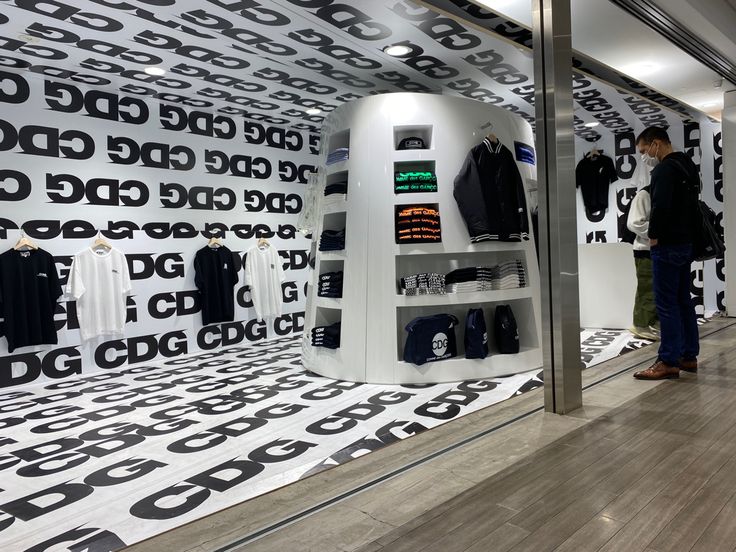
In 2002, Kawakubo introduced Comme des Garçons PLAY, a line that was playful, minimal, and instantly recognizable. Designed in collaboration with Polish artist Filip Pagowski, the red heart with eyes logo became an icon of global streetwear.
While critics feared the brand was “selling out,” PLAY was Kawakubo’s experiment in accessibility — a bridge between high fashion and youth culture.
Meanwhile, in 2004, she created one of the most influential retail concepts in fashion history: Dover Street Market (DSM).
The first DSM opened in London, blurring the line between gallery and boutique. It showcased not only Comme des Garçons but also avant-garde designers like Rick Owens, Thom Browne, and Simone Rocha.
Each DSM store (in Tokyo, New York, Los Angeles, Beijing, and Paris) became a creative universe — where clothing met architecture, sound, and light.
Her collaboration philosophy also defined the 2000s:
- Comme des Garçons x Nike — conceptual athleticism
- Comme des Garçons x Converse — the world-famous PLAY sneakers
- Comme des Garçons x Louis Vuitton — luxury reimagined
- Comme des Garçons x H&M — bridging art and mass culture
Through collaboration, Kawakubo proved that rebellion can coexist with commerce — as long as integrity leads.
SECTION 6: THE ERA OF CONCEPTUAL BEAUTY — 2010s
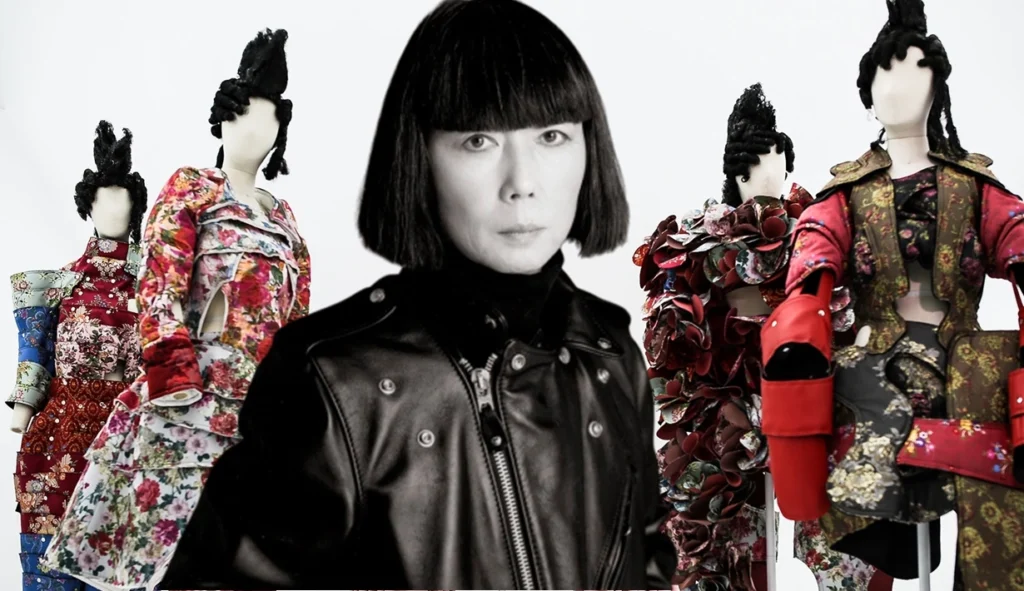
By the 2010s, Rei Kawakubo was not merely a designer; she was a philosopher of form.
Her collections became moving sculptures — explorations of emotion, identity, and abstraction.
Highlights include:
- 2012 — “White Drama”: a meditation on life’s rituals — birth, marriage, death — rendered entirely in white.
- 2014 — “Not Making Clothes”: a literal declaration that garments are now art pieces, not commercial products.
- 2017 — “The Art of the In-Between”: The Metropolitan Museum of Art in New York dedicated a full exhibition to her work — the first living designer honored since Yves Saint Laurent in 1983.
The Met described Kawakubo’s art as “the space between boundaries.” She explored dualities — fashion and anti-fashion, beauty and ugliness, life and death — all coexisting in creative tension.
Her influence became intergenerational, inspiring not only designers but also architects, musicians, and filmmakers.
“My intention is always to find something new,” she said, “something that has not existed before.”
SECTION 7: THE FUTURE IS NOW — 2020s AND BEYOND
As the world shifted toward digital fashion and AI-driven creativity, Rei Kawakubo continued her quiet revolution.
Recent collections, such as “Neo Future” (2020), “Metal Outlaw” (2021), and “Black Rose” (2023), reflect on technology, isolation, and human fragility.
Each show is less about wearability and more about emotional experience.
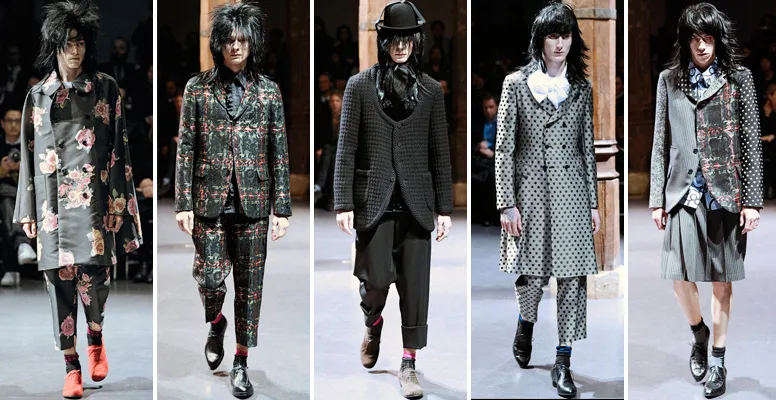
Her Comme des Garçons Homme Plus line continues to redefine masculinity with armor-like tailoring and surreal proportions.
Meanwhile, her younger protégés — Junya Watanabe, Kei Ninomiya (Noir Kei Ninomiya), and Fumito Ganryu — carry forward her spirit of experimentation.
Even as trends accelerate, Kawakubo’s brand stands still — unbothered, grounded in philosophy.
In a world obsessed with novelty, Comme des Garçons remains timeless precisely because it refuses to chase relevance.
SECTION 8: THE PHILOSOPHY — BETWEEN JAPAN AND FRANCE
Comme des Garçons embodies the dialogue between two worlds:
- Japan, with its aesthetic of subtlety, imperfection, and restraint.
- France, with its tradition of artistry, expression, and couture.
Kawakubo fused these contrasts into a singular vision — clothing as cultural conversation.
| Concept | Japanese Influence | French Influence |
|---|---|---|
| Aesthetics | Wabi-sabi — beauty in imperfection | Haute couture — technical mastery |
| Form | Minimalism, structure | Drama, performance |
| Philosophy | Restraint, spirituality | Individualism, rebellion |
This tension — between Tokyo’s silence and Paris’s expression — gives Comme des Garçons its unique voice.
It’s a brand that never “fits in,” yet defines what fashion means for those who think beyond style.
SECTION 9: REI KAWAKUBO — THE ENIGMA
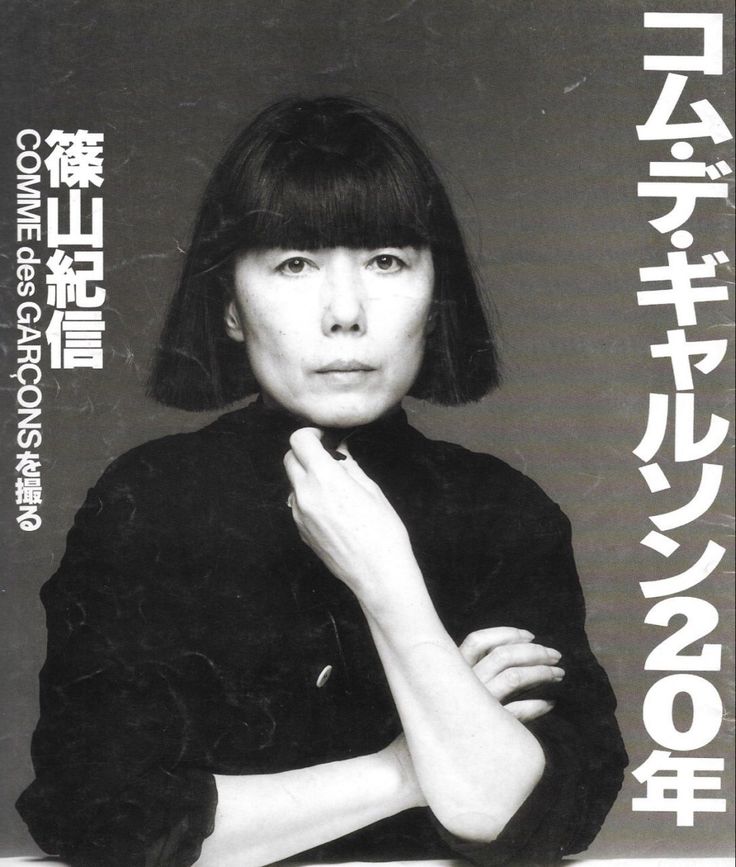
Rei Kawakubo remains one of the most private figures in fashion.
She rarely gives interviews. She rarely smiles for cameras.
She doesn’t design from sketches or computers — only intuition.
Her workspace in Tokyo is famously minimalist: bolts of fabric, scissors, silence.
Her partner and business collaborator, Adrian Joffe, often translates her abstract ideas into the global language of commerce. But Kawakubo herself stays immersed in the creative void, where instinct replaces logic.
She has said:
“I’m not interested in the mainstream. I work in the margin between worlds.”
That margin — between art and utility, Japan and France, past and future — is where Comme des Garçons lives.
SECTION 10: LEGACY AND INFLUENCE
Over five decades, Comme des Garçons has influenced every corner of fashion and design.
Its DNA can be seen in:
- Maison Margiela’s deconstruction
- Rick Owens’s brutalist silhouettes
- Demna Gvasalia’s irony and distortion
- Virgil Abloh’s conceptual streetwear
Even street fashion, once commercial and logo-driven, now carries traces of Kawakubo’s anti-fashion spirit.
She didn’t just open doors — she tore down walls between art, business, and identity.
Comme des Garçons proved that fashion can be philosophy —
that a dress can be a protest,
that a cut can be a question.
CONCLUSION: THE LANGUAGE OF REBELLION
From the quiet streets of 1960s Tokyo to the grand ateliers of Paris, Rei Kawakubo built a language out of fabric and silence.
Comme des Garçons is more than a brand — it’s a movement.
It’s the proof that beauty can exist in chaos, and that true innovation lives in contradiction.
Her empire, now spanning fashion, fragrance, art, and architecture, remains fiercely independent.
Even today, Kawakubo’s influence flows through every seam of modern fashion — from runway couture to underground streetwear.
She once said:
“The goal is not to be understood. The goal is to create.”
And she has done just that.
In a world obsessed with clarity, Rei Kawakubo remains beautifully unreadable.